

Artificial Intelligence is transforming how businesses operate in the United States. From automation and customer support to predictive analytics and marketing optimization, AI is becoming an essential tool for companies that want to stay competitive.
However, choosing the right AI solution for your business can be challenging. There are hundreds of tools, platforms, and providers available, each offering different features and capabilities.
This detailed guide explains how businesses in the USA can choose the right AI solutions, what factors to consider, and how to implement AI successfully.
Why Businesses in the USA Are Adopting AI
AI adoption in the United States has grown rapidly because it helps businesses:
- Reduce operational costs
- Automate repetitive tasks
- Improve decision-making
- Increase productivity
- Enhance customer experience
Many companies are already using AI platforms provided by organizations such as OpenAI, Google, Microsoft, and Amazon.
These platforms offer tools for machine learning, language processing, and automation that businesses can integrate into their operations.
Step 1: Identify Your Business Problem
Before selecting any AI solution, businesses must clearly define the problem they want to solve.
Common business challenges where AI can help include:
Customer Support Automation
AI chatbots can handle customer queries 24/7.
Data Analysis
AI can analyze large datasets and generate insights.
Marketing Optimization
AI helps businesses personalize advertisements and campaigns.
Fraud Detection
Financial companies use AI to detect suspicious transactions.
Without a clear goal, implementing AI may lead to wasted resources.
Step 2: Determine the Type of AI Solution You Need


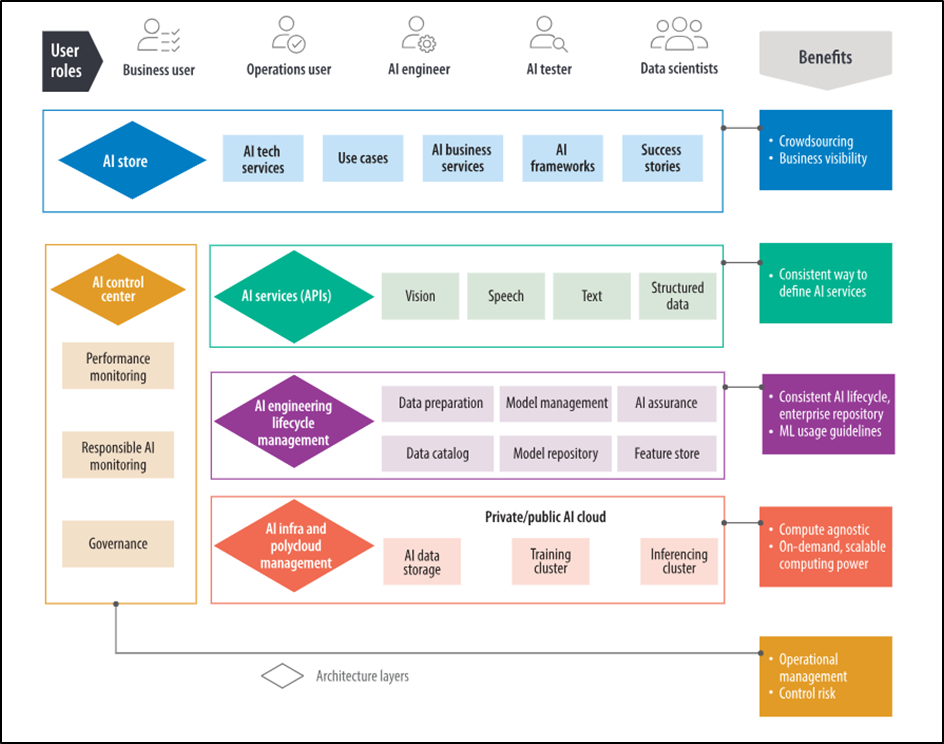
Different business needs require different AI technologies.
1. Machine Learning (ML)
Machine learning helps businesses analyze patterns in data.
Common uses:
- Predicting sales trends
- Fraud detection
- Customer behavior analysis
2. Natural Language Processing (NLP)
NLP allows machines to understand and generate human language.
Applications include:
- Chatbots
- Voice assistants
- Document analysis
Platforms from Google and Microsoft provide powerful NLP services.
3. Computer Vision
Computer vision enables machines to understand images and videos.
Use cases include:
- Facial recognition
- Quality inspection in manufacturing
- Medical imaging analysis
4. Predictive Analytics
Predictive AI helps businesses forecast future trends based on historical data.
Examples include:
- Demand forecasting
- Risk assessment
- Inventory management
Step 3: Choose Between AI Platforms and Custom AI
Businesses usually have two options when implementing AI.
Option 1: Ready-Made AI Platforms
Many companies prefer cloud-based AI platforms because they are easy to use and scalable.
Popular platforms include:
- Microsoft Azure AI
- Google Cloud AI
- Amazon Web Services AI
Advantages:
- Fast deployment
- Lower development cost
- Scalable infrastructure
Option 2: Custom AI Development
Some companies build their own AI systems for specific needs.
Advantages:
- Full customization
- Competitive advantage
- Better control over data
However, custom AI development requires skilled engineers and higher investment.
Step 4: Evaluate AI Vendors

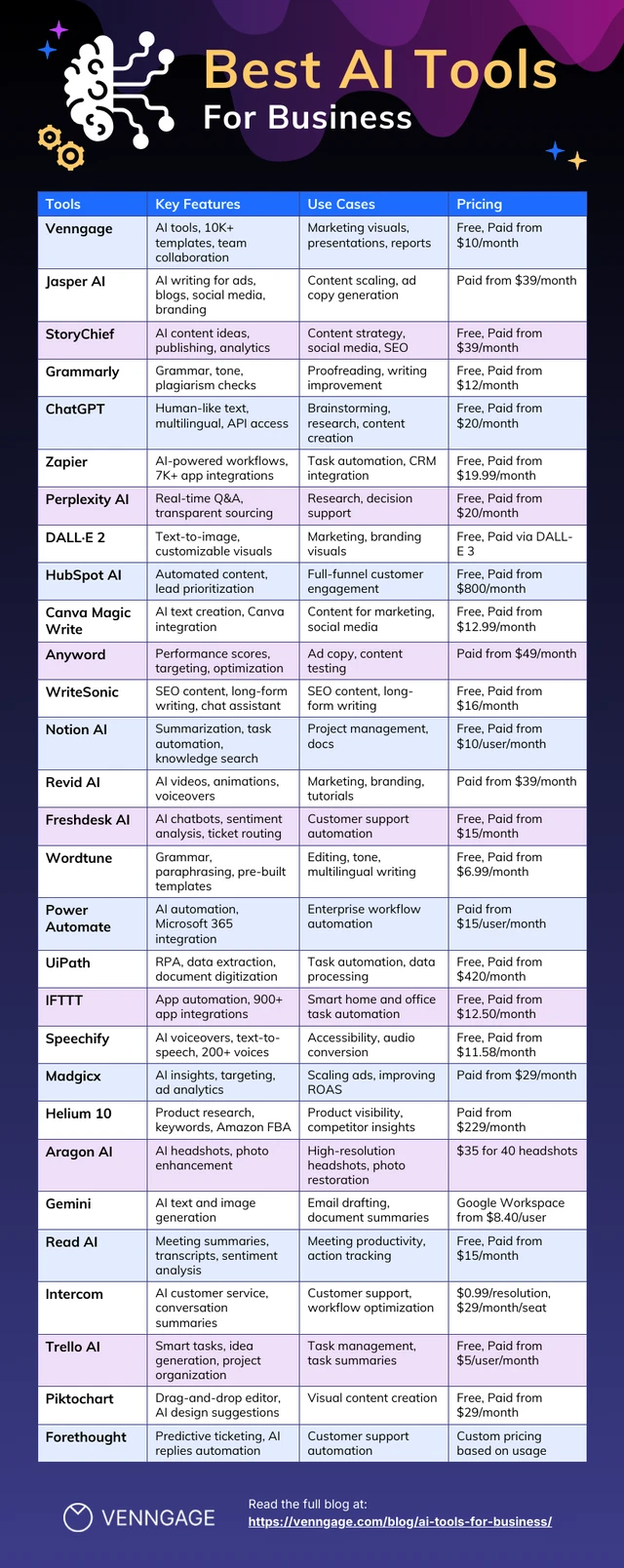

Choosing the right AI vendor is critical.
Key factors to evaluate include:
Experience and Reputation
Look for vendors with proven experience in your industry.
Scalability
The AI solution should handle future growth.
Integration
The system must integrate with your existing software and infrastructure.
Security and Compliance
Ensure the solution follows US data protection laws.
Support and Training
A good vendor provides documentation and technical support.
Step 5: Consider Cost and ROI
AI investments should deliver measurable business value.
Businesses should evaluate:
- Implementation costs
- Maintenance costs
- Training expenses
- Expected return on investment (ROI)
For example, AI automation may reduce labor costs and improve efficiency, resulting in long-term savings.
Step 6: Ensure Data Quality
AI systems depend heavily on high-quality data.
Businesses must ensure:
- Data accuracy
- Data security
- Data accessibility
Poor data quality can lead to inaccurate predictions and unreliable AI results.
Step 7: Start With a Pilot Project
Instead of implementing AI across the entire company immediately, businesses should start with a small pilot project.
Benefits include:
- Testing the technology
- Evaluating performance
- Identifying potential issues
Once the pilot succeeds, the AI solution can be expanded across the organization.
Common AI Tools Used by Businesses in the USA
Some widely used AI tools include:
- AI chatbots for customer support
- AI-powered CRM systems
- Marketing automation tools
- Predictive analytics platforms
- Fraud detection systems
These tools are widely used by American companies to increase efficiency and competitiveness.
Future of Business AI in the United States


The future of business AI in the United States looks extremely promising.
Key trends include:
- AI-powered automation
- Intelligent virtual assistants
- AI-driven decision-making
- Autonomous supply chains
- Personalized customer experiences
As AI technology continues to evolve, businesses that adopt AI early will gain a major competitive advantage.
Conclusion
Choosing the right AI solution for your business requires careful planning and evaluation. By identifying business needs, understanding available technologies, evaluating vendors, and starting with pilot projects, companies can successfully integrate AI into their operations.
In the United States, AI is rapidly becoming a key driver of innovation and economic growth. Businesses that leverage AI effectively will be better positioned to thrive in an increasingly competitive marketplace.