
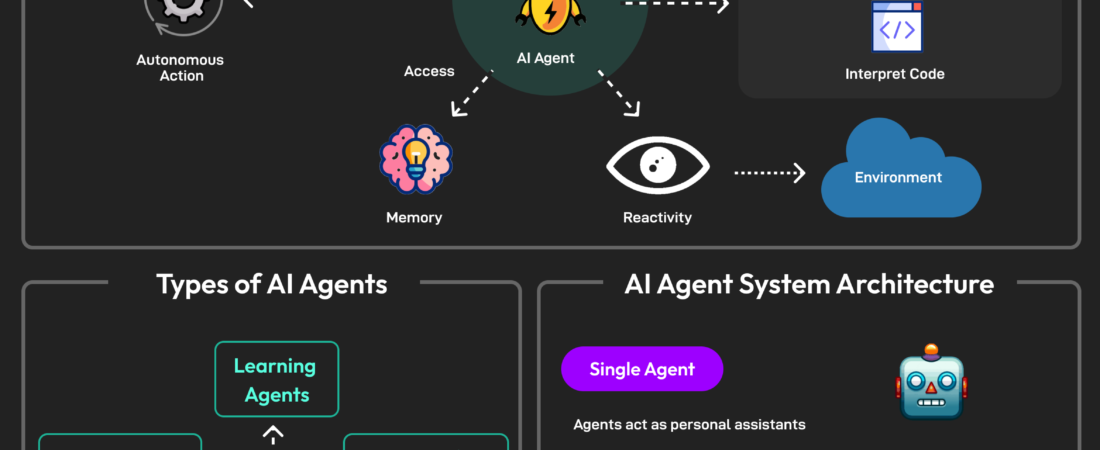


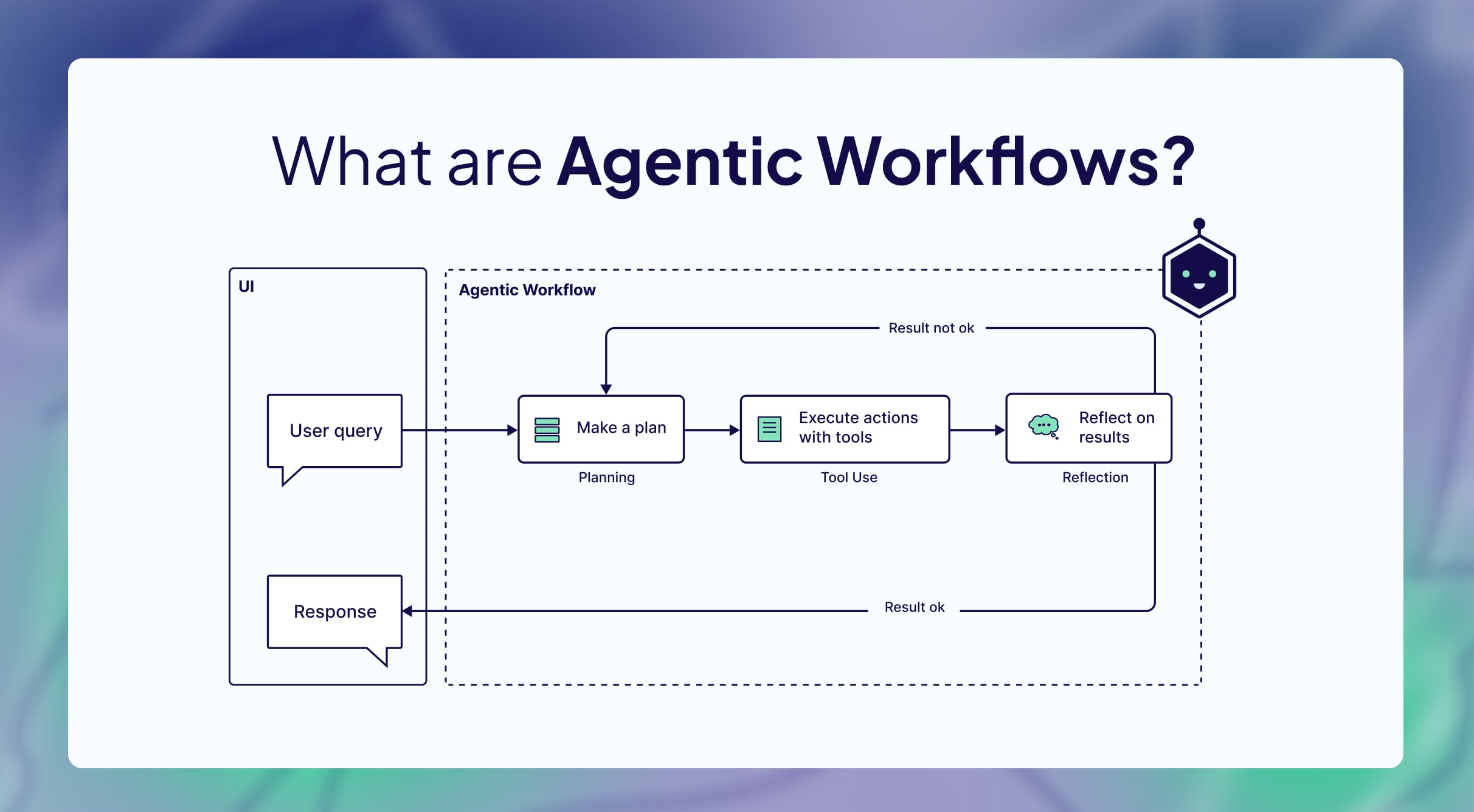
Artificial Intelligence is evolving rapidly, and one of the most exciting developments in this field is the rise of AI Agents. Unlike traditional AI tools that only respond to commands, AI agents can plan tasks, make decisions, interact with tools, and complete complex workflows automatically.
AI agents are becoming an important technology for businesses, developers, and individuals because they can automate tasks that normally require human involvement.
In this detailed guide, we will explore:
- What AI agents are
- How AI agents work
- Types of AI agents
- Real-world examples
- Popular AI agent tools
- Benefits and limitations
- Future of AI agents
This article is designed as a complete WordPress-ready post, perfect for blogs, AI websites, and technology publications.
What is an AI Agent?
An AI Agent is a software system powered by artificial intelligence that can perceive its environment, make decisions, and perform actions to achieve specific goals.
Unlike normal AI chatbots that simply answer questions, AI agents can:
✔ plan tasks
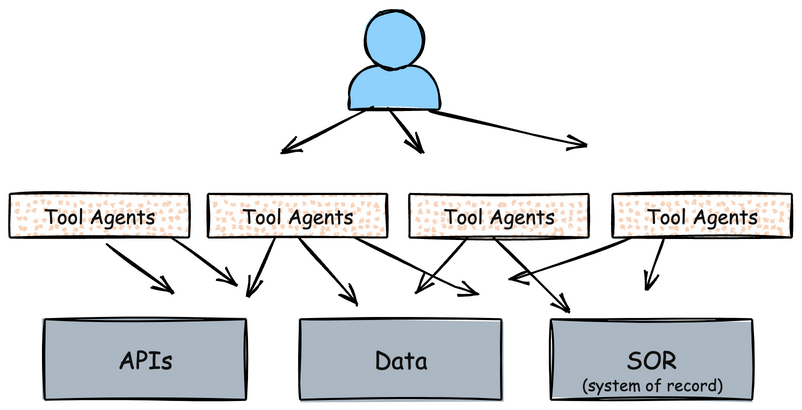
✔ use external tools
✔ analyze information
✔ perform actions automatically
For example, an AI agent could:
- search the internet for information
- analyze data
- write a report
- send an email
—all without human intervention.
AI agents are designed to behave like digital workers or assistants that can complete tasks on behalf of users.
How AI Agents Work
4
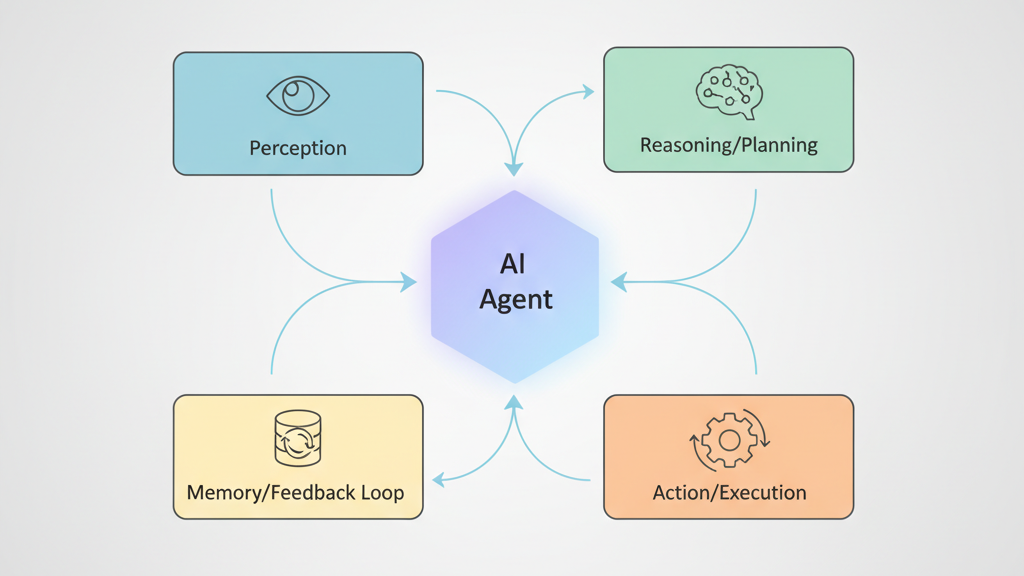
AI agents typically operate using a four-step workflow.
1. Perception
The AI agent gathers information from its environment.
This may include:
- user input
- databases
- APIs
- websites
- sensors
The agent uses this information to understand the task.
2. Reasoning
The agent analyzes the information and determines what actions should be taken.
This step often involves:
- planning tasks
- breaking problems into steps
- choosing the best strategy
3. Action
After planning, the agent executes tasks.
Examples include:
- writing code
- generating reports
- sending messages
- controlling applications
4. Learning
Advanced AI agents can learn from previous interactions and improve their performance over time.
This allows them to become more efficient and accurate.
Types of AI Agents

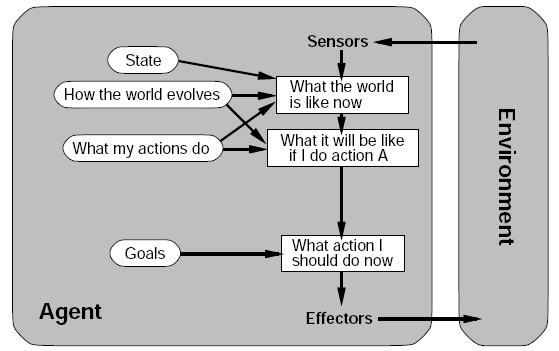
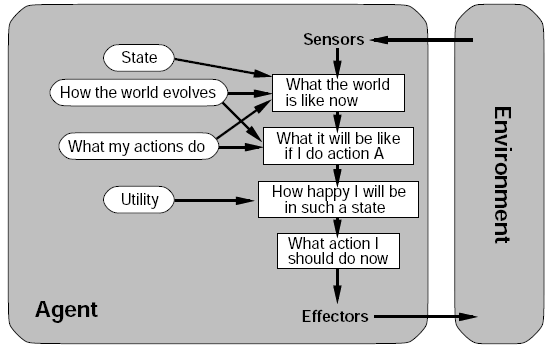
AI agents can be categorized into different types depending on how they operate.
1. Simple Reflex Agents
These agents make decisions based on current conditions only.
They do not consider past experiences.
Example:
- A thermostat adjusting temperature.
2. Model-Based Agents
These agents maintain an internal model of the environment.
This allows them to make more informed decisions.
3. Goal-Based Agents
Goal-based agents focus on achieving specific objectives.
They plan actions that help reach the desired goal.
Example:
- Navigation systems finding the best route.
4. Utility-Based Agents
These agents evaluate different options and choose the most beneficial outcome.
5. Learning Agents
Learning agents improve over time using machine learning techniques.
They adapt based on new information and experience.
Popular AI Agent Platforms


Several tools and frameworks allow developers to build AI agents.
1. AutoGPT
One of the first autonomous AI agents capable of completing complex tasks without continuous human input.
2. LangChain
A powerful framework for building AI applications that interact with tools, APIs, and databases.
3. BabyAGI
An experimental AI agent that creates and manages tasks automatically.
4. OpenAI GPT
Advanced language models that power many AI agents with reasoning and conversational abilities.
Real-World Applications of AI Agents
AI agents are already being used in many industries.
Business Automation
AI agents can automate tasks like:
- customer support
- report generation
- scheduling meetings
- managing emails
Software Development
Developers use AI agents to:
- generate code
- debug programs
- automate testing
Content Creation
AI agents can generate:
- blog posts
- marketing content
- social media posts
- video scripts
Personal Assistants
AI agents can function as digital assistants that help with:
- reminders
- research
- online tasks
Advantages of AI Agents
AI agents provide several benefits.
Increased Productivity
They automate repetitive tasks, saving time.
Faster Decision Making
AI agents can analyze large amounts of data quickly.
Continuous Operation
Unlike humans, AI agents can operate 24/7.
Scalability
Businesses can deploy multiple AI agents to handle large workloads.
Limitations of AI Agents
Despite their potential, AI agents still face some challenges.
❌ Limited understanding of complex contexts
❌ Possible errors in decision making
❌ Security risks when interacting with systems
❌ Dependence on high-quality data
Developers must design safeguards to ensure reliability and safety.
Future of AI Agents


The future of AI agents is extremely promising.
Experts believe AI agents will soon become digital workers capable of handling complex tasks across multiple industries.
Future advancements may include:
- fully autonomous business operations
- AI-powered personal assistants
- automated research systems
- AI-controlled smart cities
As AI technology improves, AI agents will become more intelligent, reliable, and widely used.
Final Thoughts
AI agents represent a major step forward in artificial intelligence. Instead of simply responding to commands, they can plan tasks, make decisions, and execute actions autonomously.
With the rapid development of AI technologies, AI agents are expected to become a key part of the digital ecosystem, helping individuals and organizations work more efficiently.
Whether used for automation, development, content creation, or personal assistance, AI agents are shaping the future of technology.