




Automated crypto trading has become one of the most powerful tools for cryptocurrency investors. Instead of manually watching markets and placing trades, traders can use automated systems and trading bots to analyze data, execute trades, and manage portfolios automatically.
Cryptocurrency markets operate 24 hours a day, making automation extremely valuable. AI-powered trading systems can monitor markets continuously, analyze massive datasets, and execute trades within milliseconds.
In this detailed guide, we will explore automated crypto trading, how it works, its benefits, risks, popular platforms, and how to build your own crypto trading bot.
What Is Automated Crypto Trading?
Automated crypto trading refers to the use of software programs or bots that automatically execute cryptocurrency trades based on predefined strategies or AI algorithms.
Instead of manually buying and selling digital assets, traders can rely on automated systems to:
- Monitor cryptocurrency markets
- Analyze trading signals
- Execute buy and sell orders
- Manage risk and portfolio allocation
These systems interact directly with cryptocurrency exchanges through APIs.
Popular exchanges used for automated trading include Binance, Coinbase, and Kraken.
How Automated Crypto Trading Works


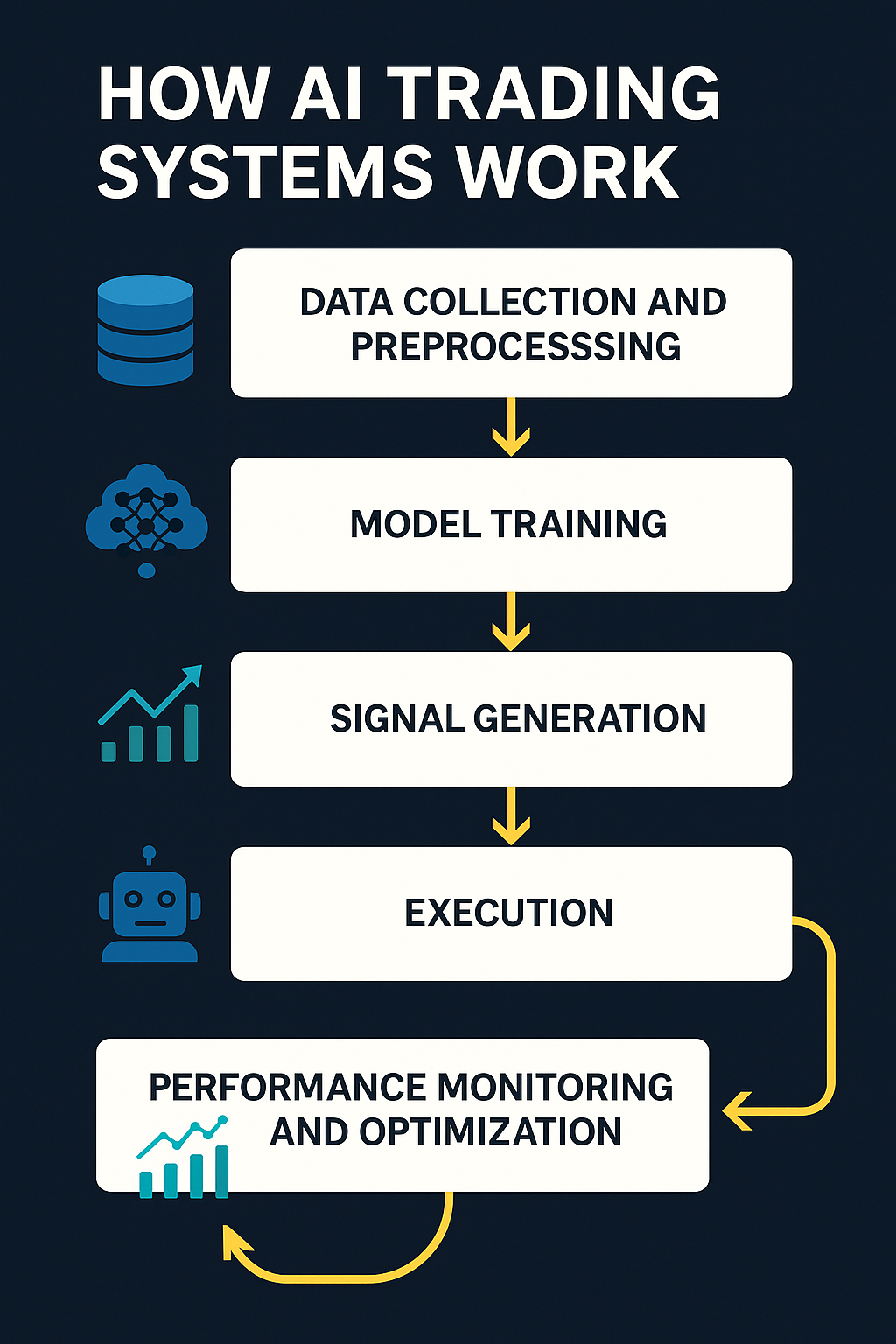
Automated crypto trading systems follow several steps to analyze markets and execute trades.
1. Market Data Collection
The trading bot collects real-time data from cryptocurrency exchanges.
Examples of collected data include:
- Price movements
- Trading volume
- Order book data
- Market trends
2. Strategy Analysis
The bot analyzes data using trading strategies such as:
- Technical indicators
- Machine learning models
- Statistical analysis
- Sentiment analysis from news and social media
3. Signal Generation
Based on the analysis, the bot generates trading signals such as:
- Buy signals
- Sell signals
- Stop-loss orders
These signals determine when the bot should enter or exit a trade.
4. Trade Execution
Once a signal is generated, the bot sends an order to the exchange via API and executes the trade automatically.
Because bots operate instantly, they can react faster than human traders.
Types of Automated Crypto Trading Strategies


Different automated trading strategies are used depending on the trader’s goals.
Trend Following
Trend-following bots identify whether a cryptocurrency price is rising or falling and trade accordingly.
Arbitrage Trading
Arbitrage bots exploit price differences between cryptocurrency exchanges.
For example:
- Buy Bitcoin on one exchange
- Sell it on another exchange where the price is higher
Scalping
Scalping bots make many small trades throughout the day to profit from tiny price changes.
Market Making
Market-making bots place buy and sell orders simultaneously to profit from the spread between bid and ask prices.
Popular Automated Crypto Trading Platforms


Several platforms provide automated crypto trading tools.
3Commas
3Commas offers automated trading bots, portfolio management tools, and smart trading terminals.
Pionex
Pionex provides built-in trading bots that help users automate cryptocurrency trading strategies.
Cryptohopper
Cryptohopper allows traders to create AI-based strategies and copy professional trading signals.
Benefits of Automated Crypto Trading
Automated trading offers several advantages.
24/7 Market Monitoring
Cryptocurrency markets operate continuously, and bots can monitor markets without interruption.
Faster Trade Execution
Bots can execute trades instantly when trading signals appear.
Emotion-Free Trading
Human traders often make emotional decisions during market volatility. Automated systems rely on predefined strategies.
Efficient Portfolio Management
Bots can manage multiple cryptocurrencies simultaneously.
Risks of Automated Crypto Trading
Despite its benefits, automated crypto trading also carries risks.
Market Volatility
Cryptocurrency markets are extremely volatile, which can lead to rapid losses.
Strategy Failures
Poorly designed strategies may perform poorly during changing market conditions.
Security Risks
API keys connected to exchanges must be protected to prevent hacking.
Technical Issues
Internet failures or system errors can disrupt automated trading systems.
How to Build an Automated Crypto Trading Bot


Developers can build automated crypto trading bots using programming languages such as Python.
Steps include:
- Collect cryptocurrency market data
- Develop trading strategies
- Train machine learning models
- Connect the bot to exchange APIs
- Backtest strategies using historical data
- Deploy the bot for live trading
Popular development libraries include:
- TensorFlow
- PyTorch
- Pandas
- CCXT (crypto exchange API library)
The Future of Automated Crypto Trading



Automated crypto trading is expected to become more advanced in the coming years.
Future innovations may include:
- Fully autonomous AI trading agents
- AI-powered hedge funds
- Blockchain-based trading algorithms
- Quantum computing for financial prediction
As artificial intelligence continues to evolve, automated crypto trading systems will become even more powerful tools for investors.
Conclusion
Automated crypto trading allows investors to trade cryptocurrencies efficiently using advanced algorithms and artificial intelligence. These systems can analyze market data, execute trades automatically, and operate continuously without human intervention.
However, successful automated trading requires careful strategy design, proper risk management, and strong security practices. As AI and blockchain technologies continue to advance, automated crypto trading will play an increasingly important role in the global financial ecosystem.