

Artificial Intelligence (AI) is revolutionizing the gaming industry. From intelligent non-player characters (NPCs) to AI-generated worlds and adaptive gameplay, AI games are shaping the future of interactive entertainment.
Today, game developers use AI to create more immersive, realistic, and dynamic gaming experiences. AI can analyze player behavior, adjust difficulty levels, generate new levels automatically, and even create entirely new game environments.
In this detailed guide, we will explore AI games, how they work, their technologies, examples, benefits, and the future of AI-powered gaming.
What Are AI Games?
AI games are video games that use artificial intelligence algorithms to enhance gameplay. Instead of following fixed scripts, AI-powered systems can learn, adapt, and respond dynamically to player actions.
In traditional games, characters often follow predetermined behaviors. However, in AI-driven games, NPCs can make decisions based on real-time data and player behavior.
This creates more realistic and unpredictable gameplay experiences.
Key features of AI games include:
- Smart NPC behavior
- Dynamic game environments
- Procedural content generation
- Adaptive difficulty levels
- Personalized player experiences
How Artificial Intelligence Works in Games


Artificial intelligence in gaming relies on several technologies that allow games to simulate intelligent behavior.
1. Pathfinding Algorithms
Pathfinding algorithms allow characters to navigate complex environments.
One famous example is the A* (A-star) pathfinding algorithm, which helps NPCs find the shortest path between two points.
This technology is widely used in strategy and open-world games.
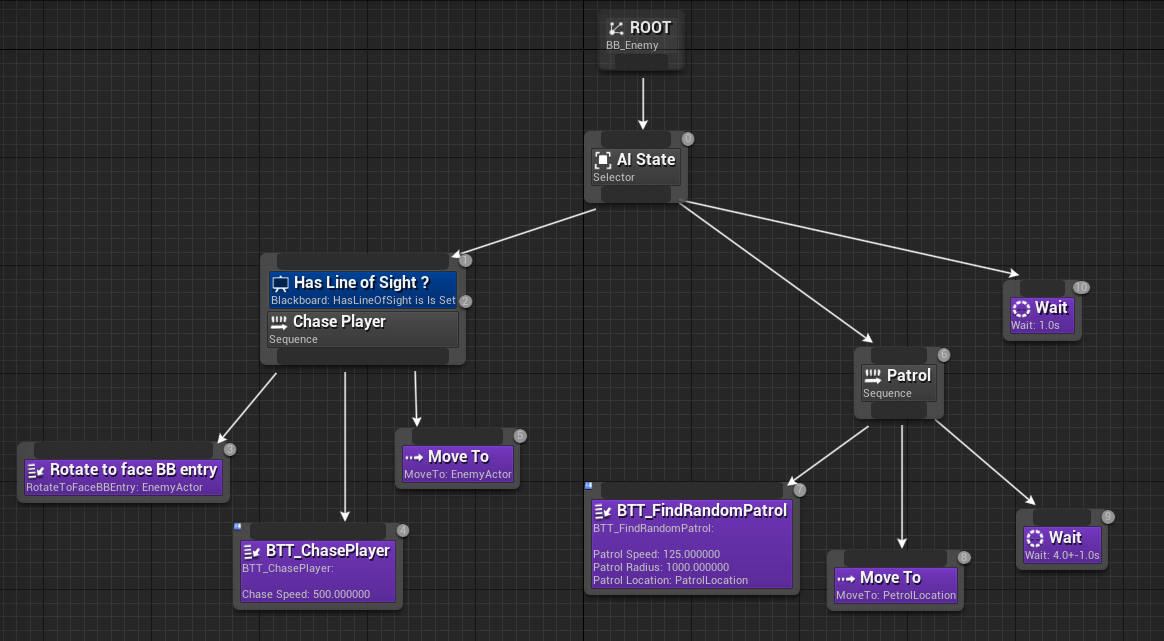
2. Behavior Trees
Behavior trees help game characters decide how to react in different situations.
For example, an enemy NPC might:
- Detect the player
- Decide whether to attack or hide
- Search for cover
- Call for backup
This creates more realistic character behavior.
3. Machine Learning
Machine learning enables games to analyze player behavior and adapt accordingly.
AI systems can:
- Adjust difficulty levels
- Improve NPC strategies
- Predict player actions
4. Procedural Generation
Procedural generation allows AI to automatically create game content such as:
- Levels
- Maps
- Missions
- Story elements
This technology helps developers create massive game worlds with minimal manual work.
Examples of Popular AI Games


Many modern games use advanced AI systems to improve gameplay.
The Last of Us Part II
This game features highly intelligent enemies that communicate with each other and adapt to player tactics.
Red Dead Redemption 2
The game world contains hundreds of NPCs with realistic behaviors, daily routines, and interactions.
Middle-earth: Shadow of Mordor
This game introduced the Nemesis System, where enemies remember previous encounters with the player.
No Man’s Sky
AI-driven procedural generation creates billions of unique planets and ecosystems.
AI Game Development Technologies


Game developers use powerful engines and tools to integrate AI into games.
Unity
Unity provides tools for:
- Pathfinding
- Machine learning agents
- NPC behavior scripting
Unreal Engine
Unreal Engine includes advanced AI systems such as:
- Behavior trees
- Navigation systems
- AI perception tools
AI Frameworks
Developers also use frameworks like:
- TensorFlow
- PyTorch
- Reinforcement learning libraries
These frameworks help create intelligent agents capable of learning from gameplay.
Benefits of AI in Gaming
Artificial intelligence brings many advantages to the gaming industry.
1. More Realistic Gameplay
AI-powered NPCs behave more like real people, making the game world feel alive.
2. Dynamic Game Worlds
AI can generate new events, missions, and environments automatically.
3. Personalized Gaming Experience
AI can analyze player behavior and adjust the game accordingly.
For example:
- Increasing difficulty for experienced players
- Simplifying challenges for beginners
4. Faster Game Development
Procedural generation allows developers to create massive worlds without designing every element manually.
AI Generated Games
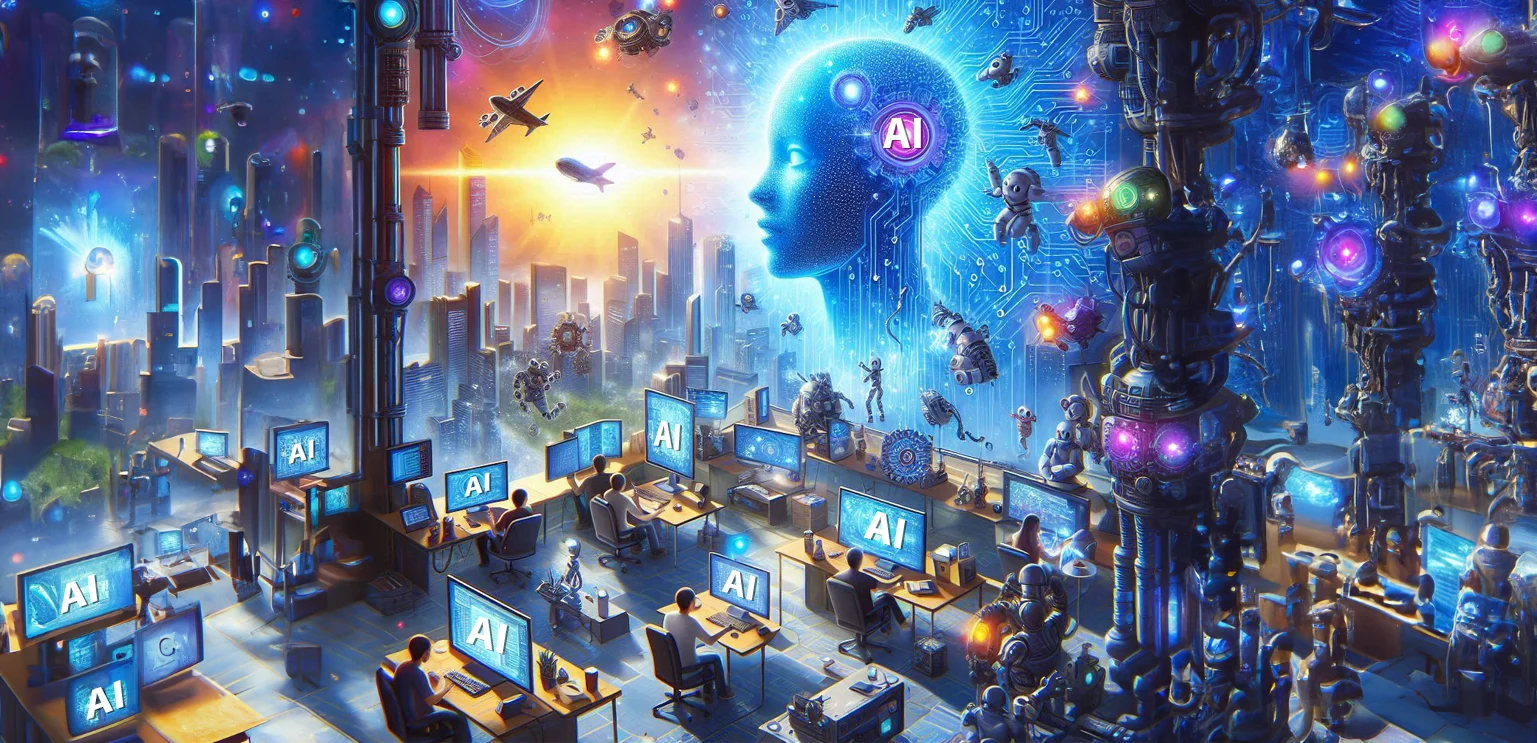


One of the newest trends is AI-generated games.
In these systems, artificial intelligence can generate:
- Characters
- Storylines
- Game levels
- Dialogue
- Music
This technology allows developers to create games faster and with greater creativity.
The Future of AI Games


The future of AI games will be even more advanced.
Experts predict several major developments:
Fully Intelligent NPCs
Characters will behave almost like real humans.
Infinite Game Worlds
AI will generate unlimited game environments.
AI Game Directors
AI systems will control the pacing and story of games dynamically.
Personalized Storytelling
Every player could experience a completely different story.
AI Games and the Gaming Industry
The global gaming industry is already worth hundreds of billions of dollars, and AI is playing a major role in its growth.
Game studios are investing heavily in AI technologies to:
- Improve player engagement
- Reduce development costs
- Create innovative gameplay experiences
As AI continues to evolve, it will become one of the most important technologies in gaming.
Conclusion
AI games represent the next generation of interactive entertainment. By using artificial intelligence technologies such as machine learning, procedural generation, and intelligent NPC systems, developers can create games that are more immersive, dynamic, and personalized than ever before.
From realistic characters to endless game worlds, AI is transforming how games are designed and played. As the technology advances, AI-powered gaming experiences will continue to push the boundaries of what is possible in digital entertainment.