

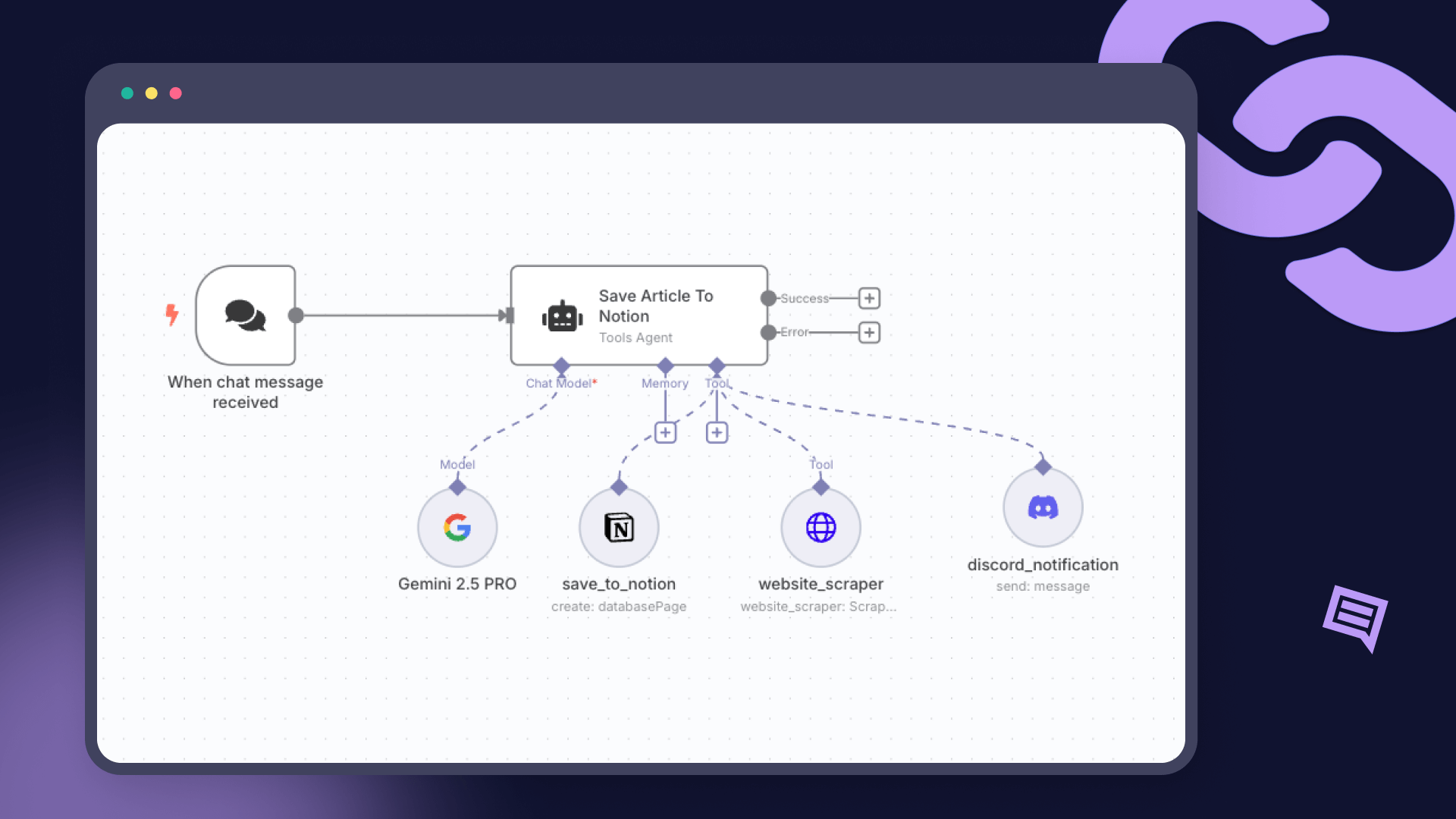
Artificial Intelligence is evolving rapidly, and one of the most exciting developments is Agentic AI. Unlike traditional AI systems that only respond to instructions, Agentic AI systems can plan, make decisions, and perform tasks autonomously.
Agentic AI represents the next step beyond Generative AI. While Generative AI focuses on creating content, Agentic AI focuses on taking actions and completing goals.
Companies such as OpenAI, Google, and Microsoft are actively researching and building AI agents capable of performing complex workflows.
This guide explains everything about Agentic AI including:
- What Agentic AI is
- How it works
- Key components
- Real-world examples
- Popular Agentic AI tools
- Benefits and challenges
- The future of autonomous AI agents
What is Agentic AI?
Agentic AI refers to artificial intelligence systems that act as autonomous agents capable of making decisions and performing tasks to achieve specific goals.
Instead of simply answering questions, Agentic AI can:
- Plan tasks
- Break down goals into steps
- Use external tools
- Execute actions
- Learn from outcomes
For example, a traditional AI chatbot like ChatGPT typically responds to prompts. But an Agentic AI system could:
- Research information online
- Analyze data
- Write a report
- Send an email
- Schedule a meeting
—all without constant human guidance.
In simple terms:
Agentic AI = AI that can think, plan, and act independently.
How Agentic AI Works
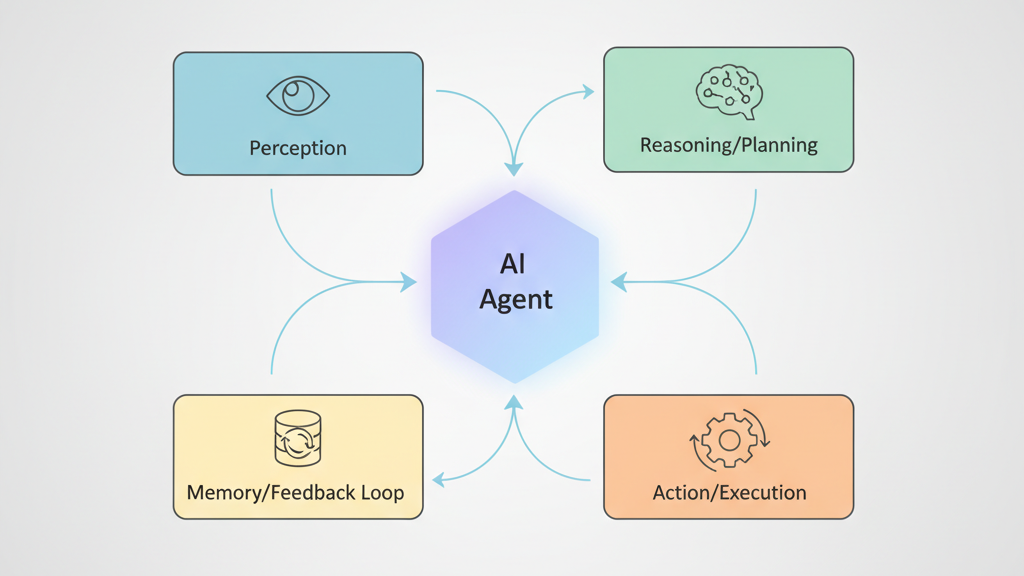
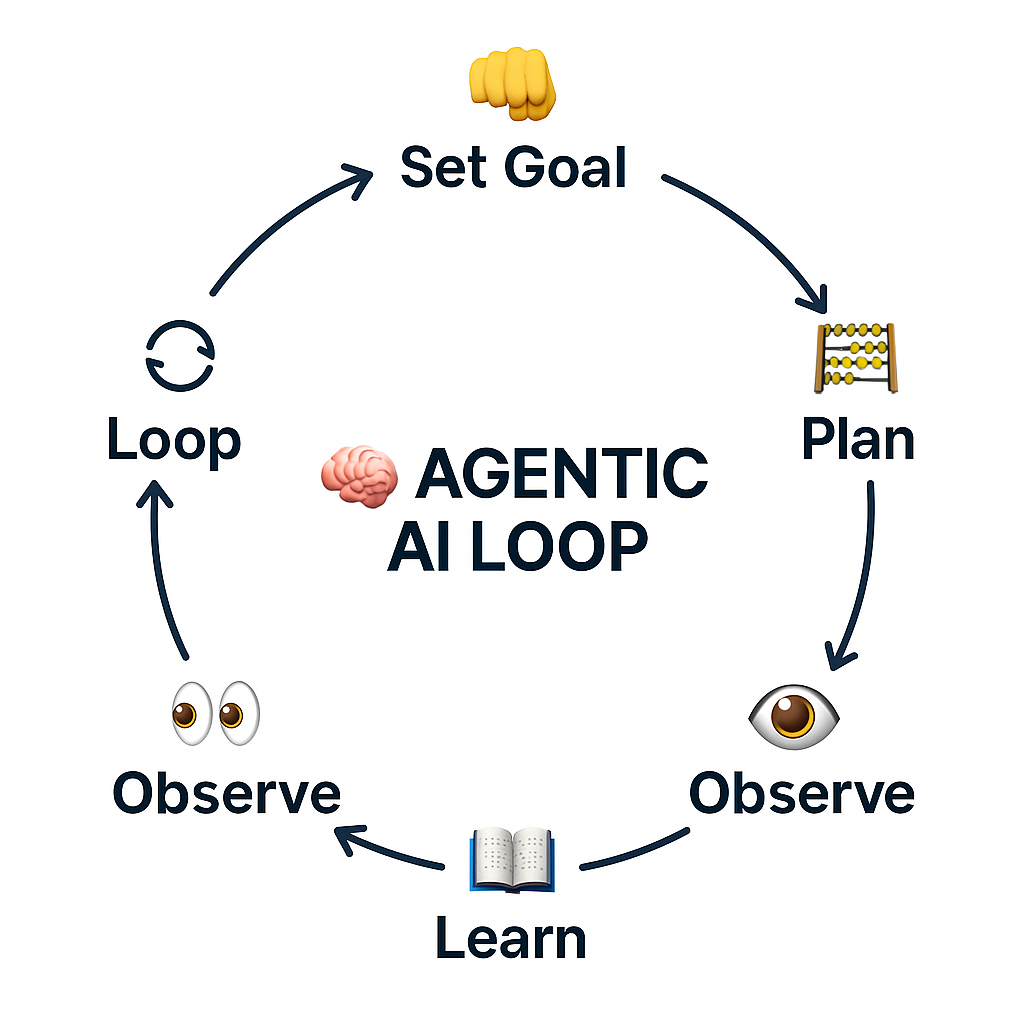
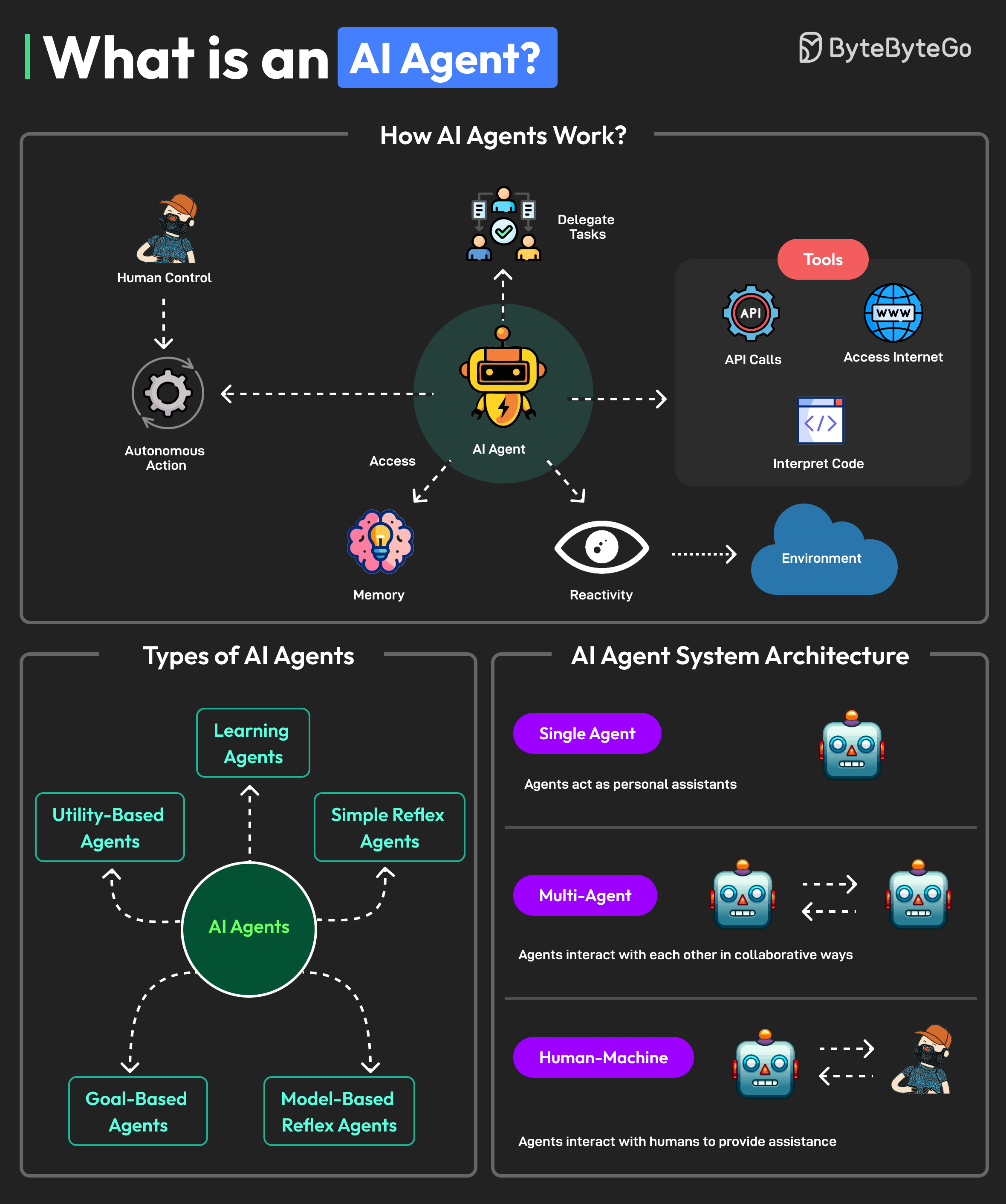
Agentic AI systems typically operate using a continuous loop:
1. Goal Understanding
The AI receives a goal or objective from the user.
Example:
“Research the best AI tools and create a report.”
2. Planning
The AI breaks the task into smaller steps.
Example plan:
- Search for AI tools
- Collect information
- Compare features
- Write a report
3. Action Execution
The AI performs tasks using tools such as:
- Web browsing
- APIs
- Databases
- Software tools
4. Observation
The AI analyzes results from previous actions.
5. Reflection and Improvement
The AI adjusts its strategy if needed and continues working until the goal is achieved.
This process is often called the Plan → Act → Observe → Reflect loop.
Key Components of Agentic AI
Agentic AI systems rely on several important components.
1. Large Language Models (LLMs)
Large language models such as GPT-4 provide reasoning and understanding capabilities.
They allow AI agents to interpret instructions and generate plans.
2. Memory Systems
Agentic AI uses memory to store information about previous actions and results.
Types of memory include:
- Short-term memory (current task context)
- Long-term memory (knowledge database)
3. Tools and APIs
AI agents interact with external tools to complete tasks.
Examples include:
- Search engines
- Code execution environments
- Email systems
- Databases
4. Decision-Making Systems
Agentic AI must evaluate different options and decide which action to take next.
This often involves reinforcement learning or reasoning models.
Examples of Agentic AI
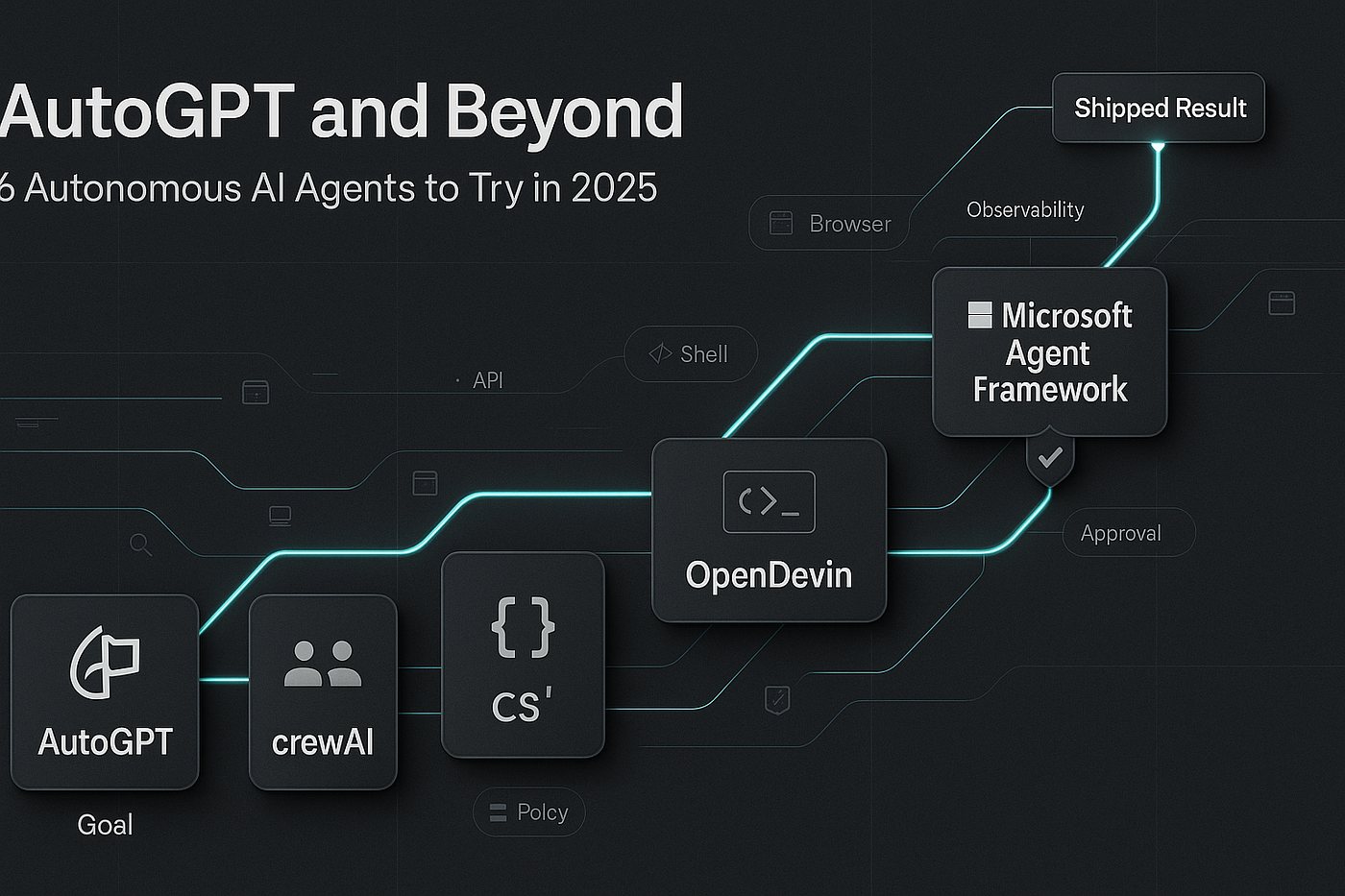


Several experimental systems demonstrate Agentic AI capabilities.
1. AutoGPT
AutoGPT is an open-source AI agent capable of completing tasks autonomously by generating its own prompts and executing actions.
Example tasks:
- Market research
- Business analysis
- Content creation
2. BabyAGI
BabyAGI is an AI agent framework that continuously creates, prioritizes, and executes tasks to achieve a goal.
3. Multi-Agent Systems
Some advanced AI environments include multiple agents collaborating together to complete complex objectives.
For example:
- One agent researches
- One writes content
- One reviews output
Real-World Applications of Agentic AI
Agentic AI is beginning to transform many industries.
Business Automation
AI agents can manage emails, schedule meetings, and analyze reports.
Software Development
AI coding agents can generate code, test it, and fix bugs automatically.
Customer Support
Autonomous agents can handle customer queries without human intervention.
Marketing Automation
AI agents can research trends, create campaigns, and analyze results.
Scientific Research
AI agents can explore large datasets and generate hypotheses.
Benefits of Agentic AI
Agentic AI provides many advantages.
Increased Productivity
AI agents can complete complex workflows faster than humans.
Automation of Complex Tasks
Agentic AI can handle multi-step processes automatically.
Continuous Operation
AI agents can work 24/7 without interruption.
Scalability
Businesses can deploy thousands of AI agents simultaneously.
Challenges and Risks of Agentic AI
Despite its potential, Agentic AI also raises concerns.
Safety and Control
Autonomous AI systems must be carefully monitored to prevent harmful actions.
Ethical Issues
AI agents could potentially misuse data or make biased decisions.
Security Risks
Autonomous systems interacting with external tools could introduce vulnerabilities.
Over-Automation
Excessive automation may reduce human oversight.
Future of Agentic AI 🌍
Agentic AI is expected to become a core technology in the coming decade.
Future developments may include:
- Fully autonomous business operations
- AI-powered digital assistants managing daily life
- Self-improving AI systems
- Autonomous research agents
Major companies including OpenAI, Google, and Microsoft are already developing more advanced AI agents.
Many experts believe that Agentic AI will be the next major leap in artificial intelligence after Generative AI.
Conclusion
Agentic AI represents a major shift in how artificial intelligence systems operate.
Instead of simply responding to prompts, AI agents can:
- Understand goals
- Plan strategies
- Execute tasks
- Learn from results
Tools like AutoGPT and BabyAGI demonstrate how AI can move toward fully autonomous systems capable of performing complex work.
As technology advances, Agentic AI may transform industries ranging from business automation to scientific research.